What Makes a Kitchen Remodel "High-End" Without Overbuilding
If you've spent any time scrolling remodeling inspiration lately, you've probably noticed a theme: waterfall quartz islands, brass fixtures, custom range hoods, the works. It's easy to walk away thinking a luxury kitchen means spending like you're on a home renovation show. But here's the thing, a truly high-end kitchen remodel isn't about how much you spend. It's about how thoughtfully every square foot is used.
For homeowners across Northern Virginia thinking about remodeling their kitchen, the goal isn't to max out every finish and feature. It's to create a space that feels elevated, functions beautifully, and actually fits your home and your budget. Overbuilding, adding features your kitchen (or your lifestyle) doesn't need, can quietly drain a budget without adding real value. So what separates a genuinely high-end kitchen from one that's simply expensive? Let's break it down.
High-End Is a Feeling, Not a Price Tag
A luxury kitchen has a certain quality to it, it feels intentional. Every material, every layout decision, every light fixture seems to belong exactly where it is. That's the difference between a kitchen that looks curated and one that just looks expensive.
When you're remodeling your kitchen, it helps to think less about "what's the most upscale version of this feature" and more about "what does this specific kitchen actually need to feel complete." A smaller kitchen with a well-proportioned island, quality cabinetry, and smart storage can feel far more luxurious than a sprawling kitchen stuffed with features nobody uses.
Kitchen Concepts That Actually Deliver a High-End Feel
If you're gathering remodeling ideas for your kitchen, here are some concepts that consistently read as luxury without requiring you to overbuild the space.
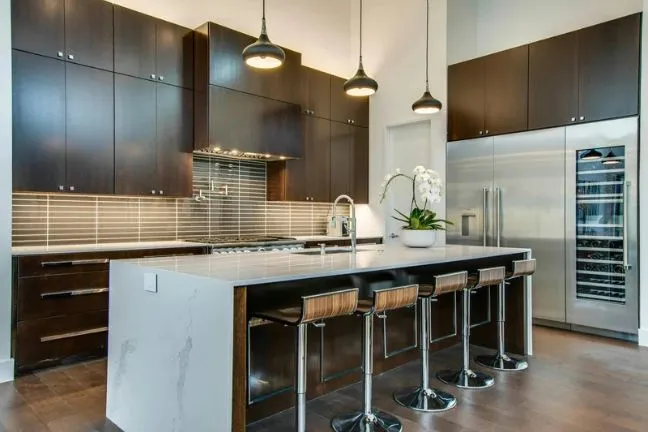
1. Layered lighting. Skip the single overhead fixture. A high-end kitchen typically layers ambient, task, and accent lighting, under-cabinet lighting for prep areas, a statement fixture over the island, and recessed lighting for overall glow. This alone can transform how a kitchen feels at night.
2. A mixed-material island. Rather than matching every surface, many of today's ideal kitchen remodels pair a wood or painted island base with a contrasting countertop material. It creates visual interest without adding square footage or extra cabinetry.
3. Full-height backsplashes. Extending tile or stone all the way to the ceiling behind the range, instead of stopping at standard counter height, is one of the simplest ways to make a kitchen feel custom-built.
4. Furniture-style cabinetry details. Small touches, furniture legs on an island, glass-front upper cabinets, or a hutch-style pantry wall, add character that reads as high-end without the cost of a full cabinetry overhaul.
5. Integrated appliances. Paneled refrigerators and dishwashers that blend into the cabinetry line keep a kitchen looking cohesive and quiet, letting the architecture and materials do the talking instead of stainless steel boxes.
6. A dedicated prep or beverage zone. Rather than a massive secondary kitchen, a compact butler's pantry or coffee station tucked off the main kitchen adds function and a sense of luxury without expanding your footprint dramatically.
7. Natural materials with texture. Honed stone, white oak, and matte finishes tend to feel more timeless, and more luxurious, than glossy, high-shine surfaces that can start to feel dated within a few years.
These are the kinds of details that make a kitchen feel considered. None of them require gutting the whole home or adding an addition.
Where Overbuilding Sneaks In
Overbuilding usually isn't one big decision, it's a series of small ones that add up. A double oven nobody will use daily. A commercial-grade range in a kitchen where two people cook occasionally. An oversized island that eats up walking space instead of adding function. Custom millwork on every surface, even where a simpler detail would look just as intentional.
None of these are "wrong" choices, they're just choices that should match how you actually live, how long you plan to stay in the home, and what future resale value looks like in your neighborhood. A kitchen remodel that outpaces the rest of the home, or the surrounding market, doesn't always return the investment you'd hope for.
Matching the Remodel to the Home
This is where a lot of Northern Virginia homeowners find the sweet spot. A historic Alexandria colonial, a newer build in Loudoun County, and a mid-century home in Arlington each call for a different version of "high-end." What feels luxurious in one home can feel out of place, or overbuilt, in another.
A good rule of thumb: your kitchen remodel should feel like the nicest room in your home, not a completely different house grafted onto it. Consistency in scale, material palette, and architectural style is often what separates a kitchen that feels genuinely upscale from one that just feels like a lot of money was spent.
Getting the Balance Right
The best kitchen remodels strike a balance between aspiration and practicality, enough luxury to make the space feel special, without so much excess that it stops making sense for your home or your day-to-day life. That balance is honestly the hardest part to get right on your own, since it takes an eye for design and a realistic understanding of costs and construction.
That's where working with an experienced local team makes a real difference. Cassella Design & Build has helped homeowners throughout Northern Virginia plan kitchen remodels that feel elevated and intentional, tailored to the scale and style of their specific home rather than a one-size-fits-all idea of "luxury." If you're weighing your options and want a second opinion on which upgrades are actually worth it for your space, it's worth having that conversation before you finalize any plans.
The Takeaway
A high-end kitchen remodel isn't about chasing every trend or maxing out the budget. It's about choosing details that suit your home, your habits, and the way you actually want to live and being just as intentional about what you leave out as what you put in. Get that balance right, and you'll end up with a kitchen that feels luxurious for years to come, not just on move-in day.
