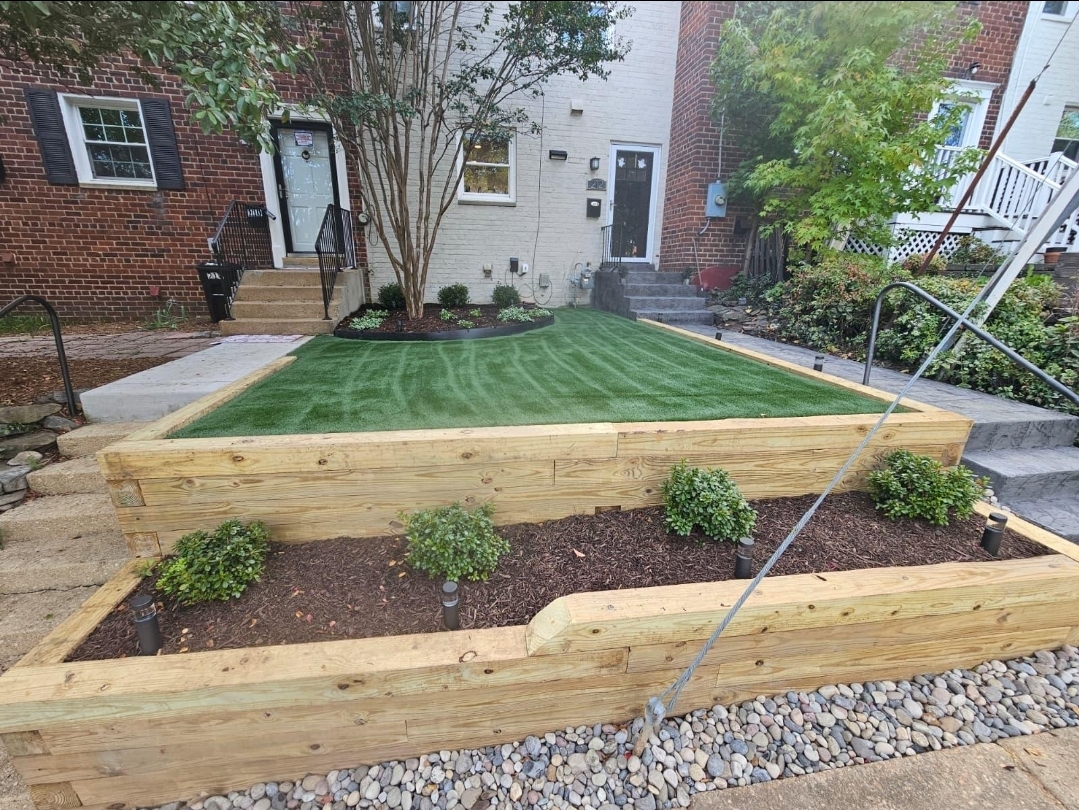
Retaining Walls 101: Drainage, Footings & Codes in NOVA
Retaining walls are one of the most misunderstood features in residential and commercial construction. While they often appear straightforward—stacked stone or concrete holding back soil—the reality is far more complex. In Northern Virginia, where sloped properties, clay-heavy soils, and strict building regulations are common, retaining walls must be engineered correctly to avoid failure, drainage issues, and costly repairs.
For homeowners improving their outdoor spaces, landlords maintaining property stability, or business owners planning site improvements, understanding how retaining walls function is essential. This guide breaks down the fundamentals of retaining wall construction in NOVA, focusing on drainage, footings, and local code considerations.
What a Retaining Wall Actually Does
A retaining wall’s primary role is structural, not decorative. It holds back soil that would otherwise erode or collapse due to gravity, water pressure, or changes in elevation. In Northern Virginia, retaining walls are commonly used to manage sloped yards, level building pads, control runoff, and create usable outdoor areas.
While retaining walls often blend seamlessly into landscaped environments, their performance depends on engineering decisions made below ground—long before stone or block is visible.
Why Drainage Is the Most Critical Factor
Drainage failure is the leading cause of retaining wall collapse. Water buildup behind a wall creates hydrostatic pressure, which can push even well-built structures forward over time. In NOVA’s climate, seasonal rain, snowmelt, and dense soils make drainage planning especially important.
A properly designed retaining wall typically includes:
Gravel backfill to allow water movement
Perforated drain pipes to redirect water away from the wall
Weep holes or outlets for pressure relief
Proper grading to prevent surface water from pooling
Skipping or downsizing these components can lead to bulging, cracking, or sudden failure—often years after installation. This is why retaining walls should be designed as part of a broader landscaping plan rather than as standalone features.
Footings: The Hidden Foundation
Footings are the structural base of a retaining wall. They transfer the wall’s load into the soil and prevent settling, sliding, or rotation. In Northern Virginia, footing depth and construction are influenced by frost lines, soil composition, and wall height.
A common misconception is that shorter retaining walls don’t need footings. In reality, even low walls can fail without proper base preparation. Key footing considerations include:
Excavation below frost depth when required
Compacted gravel or concrete base materials
Proper leveling to ensure even load distribution
Soil evaluation to determine bearing capacity
Footings must be designed with long-term performance in mind, especially on properties where walls support patios, driveways, or outdoor living features.
Understanding Retaining Wall Codes in NOVA
Local building codes in Northern Virginia regulate retaining walls based on height, location, and load conditions. In many jurisdictions, walls over a certain height—often 3 to 4 feet—require permits, engineering plans, and inspections.
Additional code considerations may include:
Proximity to property lines or structures
Load from vehicles, buildings, or pools
Drainage discharge requirements
Safety features such as guardrails
Failing to meet code requirements can result in stop-work orders, fines, or mandatory removal. For landlords and business owners, non-compliant retaining walls can also create liability risks.
Working with a design-and-build firm like Cassella Design & Build helps ensure retaining walls are designed and constructed to meet both structural and regulatory standards.
Material Selection and Structural Performance
The materials used in retaining wall construction affect both aesthetics and longevity. Common options in NOVA include:
Segmental concrete block systems
Poured-in-place concrete
Natural stone
Reinforced masonry
Material choice depends on wall height, soil pressure, drainage needs, and the surrounding environment. For example, retaining walls near outdoor living projects often require finishes that complement patios, seating areas, and landscaping while still meeting structural demands.
In more complex projects, retaining walls may also support features like outdoor kitchens, which add additional load and utility coordination requirements.
Retaining Walls and Water Features or Pools
When retaining walls are built near pools or water features, engineering becomes even more critical. Water increases soil saturation, adds pressure, and introduces safety concerns if walls fail.
For properties incorporating fiberglass pools, retaining walls must be designed to accommodate excavation depth, backfill requirements, and water management systems. Improper coordination between pool installation and wall construction can lead to shifting soil, cracked surfaces, or drainage failures.
This is why retaining walls should never be treated as an afterthought when planning large outdoor renovations.
Integration With Interior and Structural Improvements
Retaining walls don’t only affect exterior spaces. On sloped lots, wall placement can influence foundation stability, basement drainage, and overall site grading. In some cases, outdoor retaining systems directly support or protect interior spaces during interior renovations.
This overlap highlights the importance of a contractor who understands both exterior construction and structural impacts throughout the property.
Common Retaining Wall Mistakes to Avoid
Even well-intentioned projects can run into trouble if key principles are overlooked. Common issues include:
Ignoring drainage design
Underestimating soil pressure
Using decorative materials without structural reinforcement
Skipping permits or inspections
Failing to coordinate walls with other site features
These mistakes often result in higher long-term costs than proper construction would have required upfront.
Planning for Durability and Value
A retaining wall should last decades, not years. When designed correctly, it protects property value, improves usability, and reduces maintenance concerns. For landlords and business owners, it also supports safer, more reliable outdoor environments.
Proper planning, engineering, and construction ensure retaining walls perform as intended—quietly doing their job beneath the surface while supporting the spaces people use every day.
If you’re planning a retaining wall or evaluating an existing one, consulting with an experienced design & build team can help you avoid costly mistakes and ensure your project meets NOVA’s structural and code requirements
